
HTML5 vs Flash : september 2011
[This post has previously been published on Nicolas Cynober’s blog. Nicolas is a R&D Engineer and co-founder of Pearltrees]
Here we will evaluate the maturity level of HTML5, and particularly the main following points: the maturity of the technology, the size and life of the community, the cost, the technically advanced projects and the ubiquity.
Here is the key we’ll use to better understand the evolution of the code base:
Not good enough yet – Going in the right direction – It’s Ok !
Let’s start with the maturity and the projects :
Maturity of the technology
There are still important differences between browsers; things like the use of <canvas> vs <div> or the ability to rotate or not, but we can be optimistic because some browsers are beginning to show some good results.
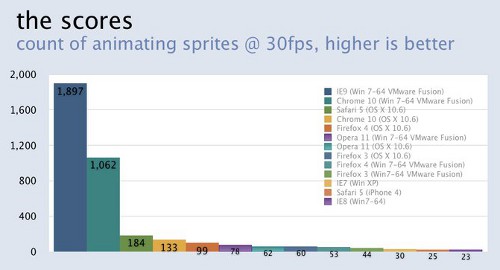
According to a recent study from Facebook about the capacities of the <canvas> object, IE9 and Chrome ( the Windows 7 version) would be 10 times as fast as the other browsers. Ideally, we would need a framework that wouldn’t take into account the way it is rendered ( <canvas> or DOM). As for SVG, it seems that it has been completely forgotten: important issues with implementation and performance have been found.
Size and life of the community
There is a strong demand, but except a few people who are using CSS3, there are not so many serious teams or mature frameworks.
Cost
Currently an HTML5 project would still cost 3 or 4 times more than a Flash project
Ubiquity
Depending on the browsers, there can still be up to 90% of differences of performance.
Technically advanced projects
This area is moving quickly. With its mobile version of Mafia Wars, Zynga shows that we can create a rich application (a game in this case) not only as a prototype, but also for a public release.
By the way, the performance issues explained above have led their team to deal without <canvas> : this project clearly comes within an R&D project and the team leader seems to be satisfied with the result.
In conclusion, HTML5 keeps on improving, so we’ll continue to check regularly to see how things are going.
An evaluation of the next points will follow soon. In the meantime, here’s a pearltree with the most popular HTML5 frameworks at the moment:

Attn: Oliver Starr
Ref: Piwik
LOVE.NEXT.NET ready on my part.
Could you send me an independent Pearltees browser to my e-mail that simply remembers me in the stead of me remembering others.
Changes in world IT & ITC upcoming, mayeur.
From: Henk
Ref: Piwik